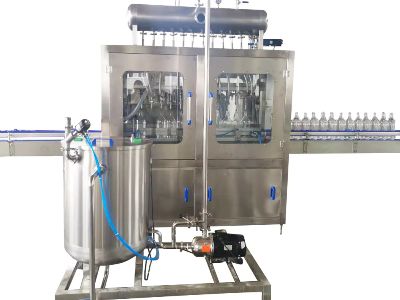
Air Conveyor for PET Bottles: Key Specifications

All Categories

air conveyor for pet bottle

An air conveyor for PET bottles is an  essential piece  of  equipment in the beverage and packaging industries, specifically designed  to transport  lightweight PET bottles  efficiently and  safely along production lines. For purchasing managers and engineers, understanding the technical specifications, installation  requirements,  and applications of  air conveyors is crucial for optimizing production  efficiency  and ensuring product integrity. This  article will guide you through making informed  decisions  about  selecting, installing, and maintaining  air  conveyors  tailored for PET bottle handling.

Key Specifications for Air Conveyors in PET Bottle Handling

When assessing air conveyors for PET bottle applications,  focus on  key  specifications that impact performance:

Airflow Rate: Measured in cubic feet per minute (CFM), this  specification determines the conveyor's ability to lift and transport bottles. An inadequate airflow may lead to  bottle jams or inconsistent movement. Conveyor Width: This should be compatible with the bottle diameter to ensure  stability during  transport.  A wider conveyor may be necessary for larger bottles. Weight Capacity:  Ensure the conveyor  can support the total weight of the bottles,  factoring in the maximum load during peak production.  Material Construction: Air conveyors  are typically made from stainless steel or high-grade plastic to ensure durability and resistance to corrosion.  Verify that the chosen material aligns with industry standards for food safety. Control System: Look  for conveyors equipped with programmable logic  controllers (PLCs) for better control over speed and operational parameters, which  can enhance efficiency.

Understanding these specifications will enable you to choose a  conveyor that aligns  with your operational requirements.
 

Effective Installation Guidance for Air Conveyors in Your Facility

Proper installation of an air conveyor is critical for optimal performance. Here are some  key steps:

  Site Preparation: Ensure that the installation area is clean and free from  obstructions. Assess the floor's load-bearing capacity to support the conveyor system.  Alignment: Position the conveyor according to the layout plan, ensuring it is  level  and aligned with other equipment in the production line to prevent operational disruptions. Air Supply Connection: Connect the air supply lines to the conveyor. Ensure that  air pressure meets the  manufacturer’s specifications for  proper  operation. Testing: Once installed, conduct a  thorough test run  with various bottle  sizes  and weights to confirm  that  the system operates smoothly and efficiently. Training: Provide training for operators on the  correct usage and maintenance  of the air conveyor to minimize downtime and enhance safety. 

Following  these guidelines will help ensure a successful installation and reliable operation of your air conveyor system.

Common Problems with Air Conveyors and Their Practical Solutions

Several issues  can  arise with air  conveyors, impacting functionality and productivity. Here  are common problems and  their solutions:

Bottle Jams: Often caused by improper alignment or insufficient airflow. Regularly inspect the conveyor  for  blockages and adjust airflow settings  as necessary. Inconsistent Bottle Movement:  This  can occur if the conveyor is not level or if there is fluctuating air pressure. Verify alignment and  check the air supply system  for leaks or pressure  drops. Wear  and  Tear:  Regular maintenance  is essential, as components may wear out over time. Schedule routine inspections and replace worn parts to prevent breakdowns. Noise Issues: Excessive noise can indicate mechanical issues or misalignment. Investigate and address these concerns promptly to maintain a conducive working environment.

By proactively addressing these common issues, you can  maintain efficient operation and extend the  lifespan of your air  conveyor system.

Applications of Air Conveyors in PET Bottle Production Lines

Air conveyors are  versatile tools in PET bottle production lines, serving  various functions:

Transportation: They efficiently  transport PET bottles from one station to another, reducing manual  handling and potential damage. Sorting: Air conveyors can be used  to sort bottles by size or type during  the production process, enhancing  workflow  efficiency. Integration with Filling  Lines: Seamlessly connect air conveyors with filling machines to streamline the  packaging process, ensuring a smooth transition from filling  to  capping.  Recycling Processes: In facilities focusing on sustainability, air conveyors can transport empty  or rejected bottles to recycling stations, supporting eco-friendly practices.

Understanding these applications can help you leverage air conveyors to enhance productivity and efficiency in your production line. For example, combining them with a Beverage Pretreatment System can optimize the overall workflow.

By  carefully considering these aspects, you  can select, install,  and maintain an air conveyor  system that meets  your business's needs, ensuring reliable and efficient  handling of PET bottles.

How to Choose the Right Air Conveyor for PET Bottle Applications

Selecting the right air conveyor for PET bottles involves understanding  your specific production needs  and the operational environment.  Consider the following factors:

Bottle Size and Shape: Ensure the air  conveyor can accommodate the dimensions and weight  of your bottles. Irregular shapes may require additional customization. Throughput Requirements:  Assess your  production volume to determine the conveyor's speed  and capacity. A higher  throughput may  necessitate a  more robust system. Material Compatibility: The conveyor should be made of materials that can withstand the operational  environment,  including exposure  to moisture and  cleaning chemicals. Space Constraints: Evaluate your  facility layout to choose a conveyor design  that fits seamlessly into existing workflows without obstructing operations. Energy Efficiency: Look for energy-efficient models to reduce  operational costs. Consider conveyors with variable speed drives for greater flexibility.

By evaluating these  factors, you can select an air conveyor that meets your production  needs while optimizing efficiency. Additionally, integrating a Packing Machine can further enhance your packaging process.

Our Blog Posts

Juice Bottling Line Capacity: Scaling From 1,000 to 10,000 Bottles Per Day

17

Oct

Juice Bottling Line Capacity: Scaling From 1,000 to 10,000 Bottles Per Day

Increasing your juice bottling line from 1,000 to 10,000 bottles a day: A daunting yet worthwhile prospect. Mars knows how critical it is to scale production so as to keep up with the rising demand while also improving efficiency and quality. Now let...
View More
Water Bottling Line Quality Testing: pH and Microbial Checks for Bottled Spring Water

21

Nov

Water Bottling Line Quality Testing: pH and Microbial Checks for Bottled Spring Water

Bottling water is not just about sticking a bottle under a tap. It’s about ensuring that every bottle shipped from Mars holds safe, fresh spring water in which you can trust. There are two critical checks on the assembly line: testing the pH of the w...
View More
Carbonated Soft Drink Bottling Line Future Trends: AI-Powered Systems for Predictive Maintenance

25

May

Carbonated Soft Drink Bottling Line Future Trends: AI-Powered Systems for Predictive Maintenance

Carbonated soft drinks is big in many people lives. They come with all kind flavors and kids plus adults enjoy them. But you ever thought how these drinks made? At Mars we focus make process easy and fast. One fun part is the bottling line where drin...
View More

Get a Free Quote

Our representative will contact you soon.
Email
Name
Company Name
Message
0/1000

Get a Free Quote

Our representative will contact you soon.
Email
Name
Company Name
Message
0/1000